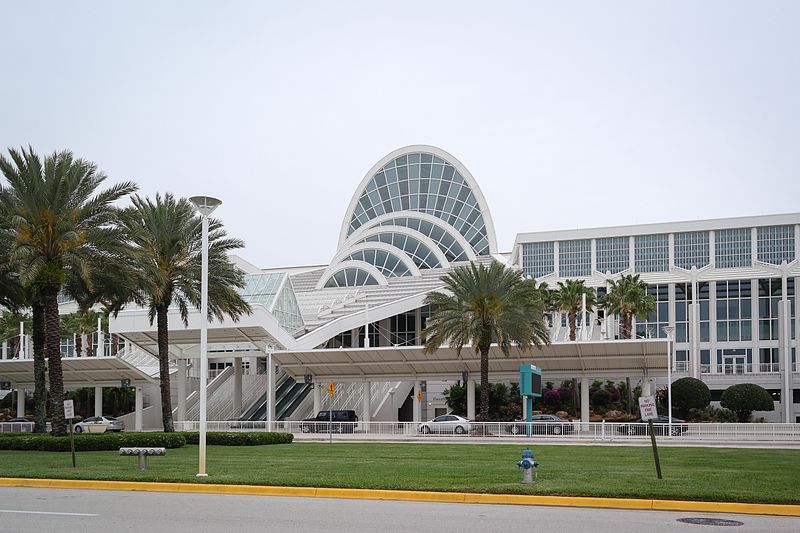
Las Vegas Convention Center exterior
Green Analytics •• Las Vegas Sustainable Events Guide

Las Vegas.
The Sustainable Convention City.

The world's number one convention destination is also its most NZCE-aligned — built from the state level down to the convention floor to host events the way the world now expects them to be hosted.

Net Zero Carbon Events • Five Priority Action Areas

Las Vegas Aligns With Every
NZCE Priority Action Area

What is the NZCE Roadmap?

Launched at COP26 in 2021 and published in 2022, the Net Zero Carbon Events (NZCE) Roadmap is the globally adopted standard for event decarbonization • backed by EIC, ICCA, UFI, and MPI • targeting a 50% emissions reduction by 2030 and net zero by 2050.

It defines five Priority Action Areas covering the full carbon footprint of a business event. Las Vegas aligns with all five; what follows is the documented case for each, with venue-level data and sourced evidence built for a CDP disclosure, a CSRD filing, or an EIC certification review.

What makes Las Vegas exceptional for sustainable events isn't a single program or a single property. It's the full stack — policy, infrastructure, and venue-level commitment operating in the same market simultaneously, in a way that no other convention city can currently replicate.

Las Vegas isn't adapting to the global standard for sustainable events. It was already built for it.

NZCE Roadmap 2022 • 50% reduction by 2030 • net zero by 2050
Convention City Comparison

Las Vegas vs. Chicago vs. Orlando

Destination selection is one of the highest-impact sustainability decisions an event organizer makes. Here's how the three dominant US convention markets compare across all five NZCE action areas.
★ Recommended
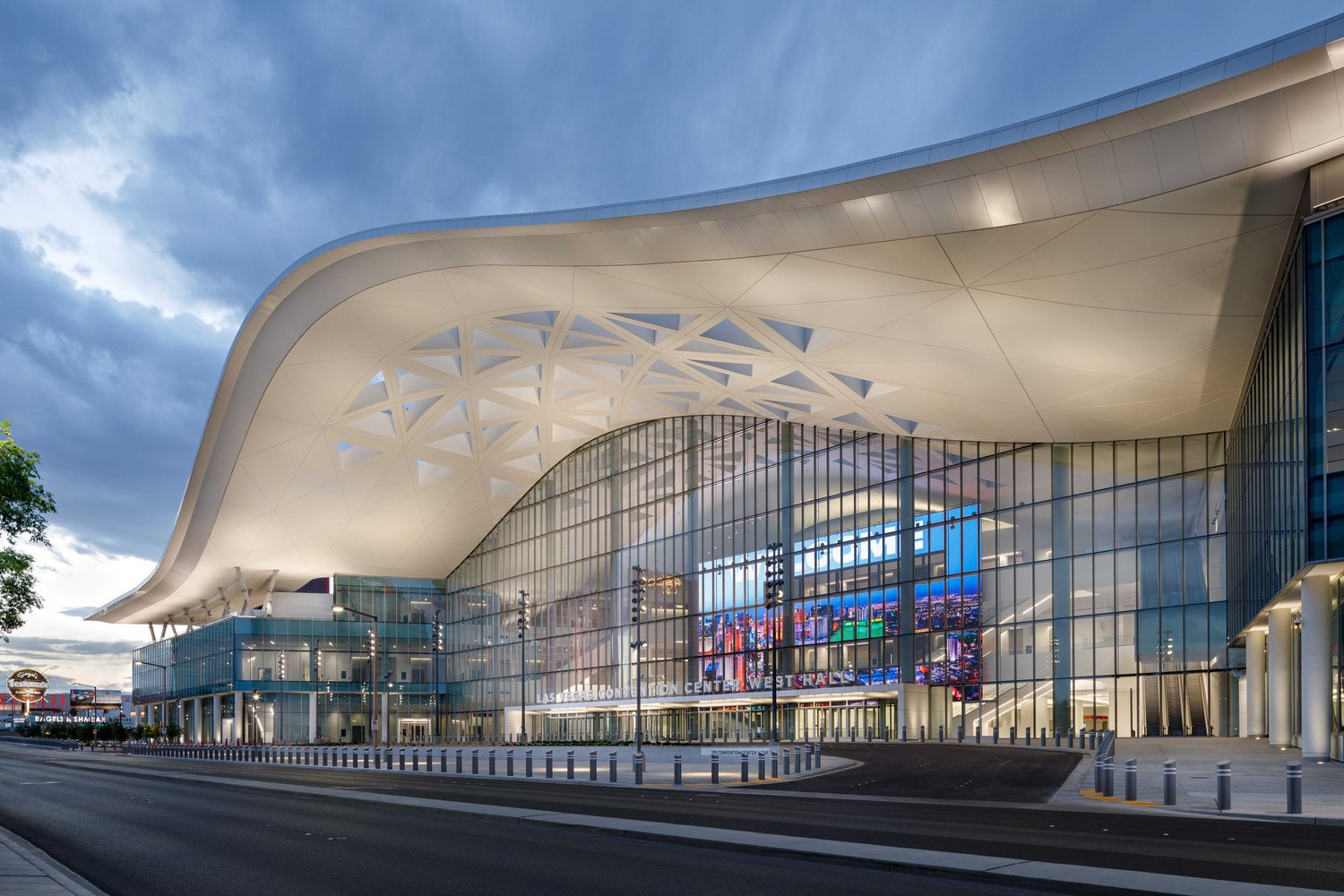
Las Vegas, Nevada
Las Vegas Convention Center
AA1 Energy: ~47% NV Energy grid. Wynn and Mandalay Bay convention centers at 100% renewable. Best energy profile of any US convention market.
AA2 Materials: Permanent local contractor inventories. Full circular production infrastructure at scale across hundreds of shows per year.
AA3 Food: Established food rescue, composting, and donation programs across major venues. Operationally documented.
AA4 Logistics: Lowest freight miles of any major US convention market. Local supply chain is the default, not a premium.
AA5 Travel: Walk-in integrated resorts eliminate hotel-to-venue transport. Vegas Loop all-electric campus transit. Unique to this market.
Structural advantages across all five NZCE action areas — the strongest NZCE alignment of any major US convention market.
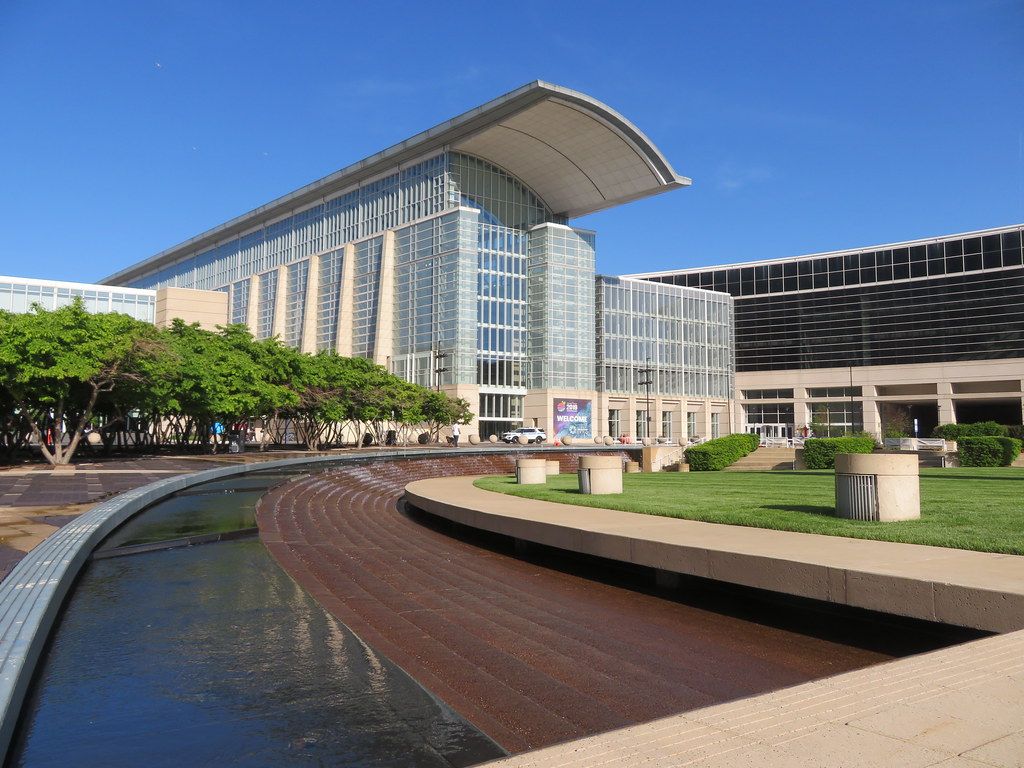
Chicago, Illinois
McCormick Place Convention Center
⚠️
AA1 Energy: Illinois grid still carries significant coal generation. No on-site renewable generation at McCormick. Improving but well below Nevada.
AA2 Materials: Strong local contractor base. Freeman, GES Chicago operations established. Solid circular production infrastructure.
AA3 Food: Illinois food rescue mature. Chicago catering supply chain local and well-developed.
⚠️
AA4 Logistics: Midwest hub advantages but higher freight miles than Las Vegas. Equipment ships from multiple regional bases.
AA5 Travel: Hotels spread across the city. Shuttle and rideshare required for virtually all attendees. No walk-in convention option.
Strong materials and food credentials. Energy grid and ground transport are documented disadvantages vs. Las Vegas.
Orlando, Florida
Orange County Convention Center
AA1 Energy: Florida grid is fossil-fuel dominant — highest event energy emissions factor of the three markets. Significant documentation disadvantage.
⚠️
AA2 Materials: Contractor base present but less dense. More materials shipped from other markets compared to Las Vegas.
⚠️
AA3 Food: Food rescue programs developing. Less established venue-level infrastructure than Las Vegas or Chicago.
⚠️
AA4 Logistics: High dependence on trucked-in materials. Dispersed contractor base increases freight miles significantly.
AA5 Travel: Sprawling resort district. Cars or shuttles required for virtually all attendees. No walk-in convention option of any kind.
Warm-weather destination appeal offset by the highest energy emissions factor and ground transport dependence of the three markets.
✅ NZCE advantage documented • ⚠️ Partial or developing • ❌ Documented disadvantage vs. Las Vegas
Sources: NV Energy 2025 RPS Report, EPA eGrid, MGM Resorts ESG 2024, Wynn Resorts ESG, NZCE Roadmap 2022
Aerial view of Mandalay Bay Convention Center solar panels on the Las Vegas Strip
Priority Action Area 1 — Renewable Energy

Power Events Efficiently
with Clean, Renewable Energy

The NZCE identifies energy as the most significant element of an event's footprint within direct stakeholder control. Las Vegas now offers three documented tiers of renewable energy available to every event organizer — no other major US convention market offers renewable energy documentation at any of these levels, let alone all three.

NV Energy Grid
~47%
Nevada's grid renewable energy share — highest of any major US convention state
State RPS mandate drives continued growth toward 50% by 2030
Every event in Las Vegas benefits from this baseline automatically
Source: NV Energy 2025 Integrated Resource Plan, Nevada RPS
Wynn Las Vegas
100%
Convention center powered by 100% renewable energy
On-site solar array plus renewable energy certificates
Documented and verifiable for event-level reporting
Source: Wynn Resorts ESG Report 2024
Mandalay Bay / MGM
100%
Daytime operations powered by rooftop solar — largest rooftop array in the US
26-acre, 8.3 MW solar installation on convention center roof
MGM Resorts committed to 100% renewable electricity by 2030
Source: MGM Resorts ESG Report 2024, NV Energy
No other major US convention market offers documented renewable energy at the grid, property, and venue level simultaneously.
Priority Action Area 2 — Sustainable Materials

Redesign Events to Utilise
Sustainable Materials and Be Waste Free

The NZCE calls for a circular approach — reusable items, sustainable materials, and designing out waste from temporary event infrastructure. This is where Las Vegas's operational maturity is most visible and least understood by planners from other markets.

Permanent Contractor Inventories
100+
Local general service contractors maintain permanent Las Vegas inventories
Booth walls, carpet, furniture, signage — stored and reused across hundreds of shows per year
No cross-country freight for standard production materials
Source: ESCA, EDPA industry data; Las Vegas contractor operations
Circular Production Model
Decades
The reuse model ESCA and EDPA now recommend as aspirational has been standard Las Vegas practice for decades
Materials cycle between shows within the same market
Lifecycle extends 10–15+ years for core inventory items
Source: ESCA Sustainability Guidelines, EDPA, Las Vegas contractor operations
Waste Diversion Infrastructure
90%+
Major venues operate multi-stream recycling and back-of-house sorting
Donation programs for reusable materials after show teardown
Material bans (e.g., single-use plastics) enforced at venue level
Source: Sands Eco360, MGM Resorts ESG, venue waste diversion reports
The circular production infrastructure that other markets are building toward is already the operating default in Las Vegas.
Priority Action Area 3 — Food & Waste

Source Food Sustainably,
and Eliminate Food Waste

The NZCE calls for sustainable food sourcing policies, composting facilities, and food donation programs as baseline requirements. Las Vegas venues have operated food rescue infrastructure for over a decade — built by practitioners who understood how to navigate the legal and operational frameworks that most programs fail to sustain long-term.

Food Rescue Programs
1M+
Over 1 million meals donated from Las Vegas resort food rescue operations
Established partnerships with Three Square Food Bank and local nonprofits
Operational for 10+ years across major Strip properties
Source: Three Square Food Bank, Sands Eco360, MGM Resorts community reports
Composting Infrastructure
Operational
Largest composting program in Las Vegas history operated at venue level
Back-of-house organic waste separation at scale
Pre-consumer and post-consumer streams documented and tracked
Source: Sands Eco360 Program, Las Vegas venue sustainability reports
Sourcing & Menu Design
Local
Exclusive in-house catering with regional supplier agreements
Menu composition designed around local and seasonal availability
Portion management and waste prevention built into standard catering operations
Source: Las Vegas resort catering operations, NZCE food sourcing guidelines
Food rescue, composting, and local sourcing are built into the Las Vegas operating model — not added as sustainability initiatives.
Priority Action Area 4 — Logistics & Supply Chain

Move Goods and Equipment Efficiently
and Transition to Zero Emissions Logistics

The NZCE calls for local sourcing, reduced freight miles, and transition to low-emission vehicles for event logistics. This action area directly rewards Las Vegas's geography and supply chain density. Most production materials never leave the region between shows — a structural freight advantage that no other US convention market can replicate.

Local Supply Chain Density
Lowest
Lowest freight miles of any major US convention market
Production materials stored locally and cycled between shows within the region
Local sourcing is the default operating model, not a premium add-on
Source: ESCA logistics data, Las Vegas contractor operations, freight industry benchmarks
Contractor Proximity
< 30 mi
Major general service contractors operate warehouses within 30 miles of the Strip
Freeman, GES, and specialty contractors maintain permanent Las Vegas operations
Equipment delivery measured in minutes, not days
Source: Freeman, GES, Las Vegas contractor facility data
Regional Material Cycling
300+
300+ major trade shows per year cycle materials within the same local inventory
Booth components, carpet, signage, and furniture reused across shows without cross-country shipping
Structural reduction in Scope 3 freight emissions vs. any other US market
Source: LVCVA event calendar, ESCA, EDPA industry data
Geography and supply chain density give Las Vegas a structural logistics advantage no other US convention market can replicate.
Priority Action Area 5 — Travel & Transport

Reduce the Largest Share
of an Event's Footprint

Attendee travel consistently makes up 70–87% of a business event's total carbon footprint — the single largest and hardest-to-control category in any event's emissions profile. Las Vegas offers two structural advantages no other US convention market can provide.

Integrated Resorts
0 mi
Walk-in convention model eliminates hotel-to-venue ground transport entirely
Attendees stay, eat, meet, and exhibit in the same property
No shuttle buses, no rideshare surges, no parking emissions
Source: LVCVA, Las Vegas integrated resort operations data
Vegas Loop
All-Electric
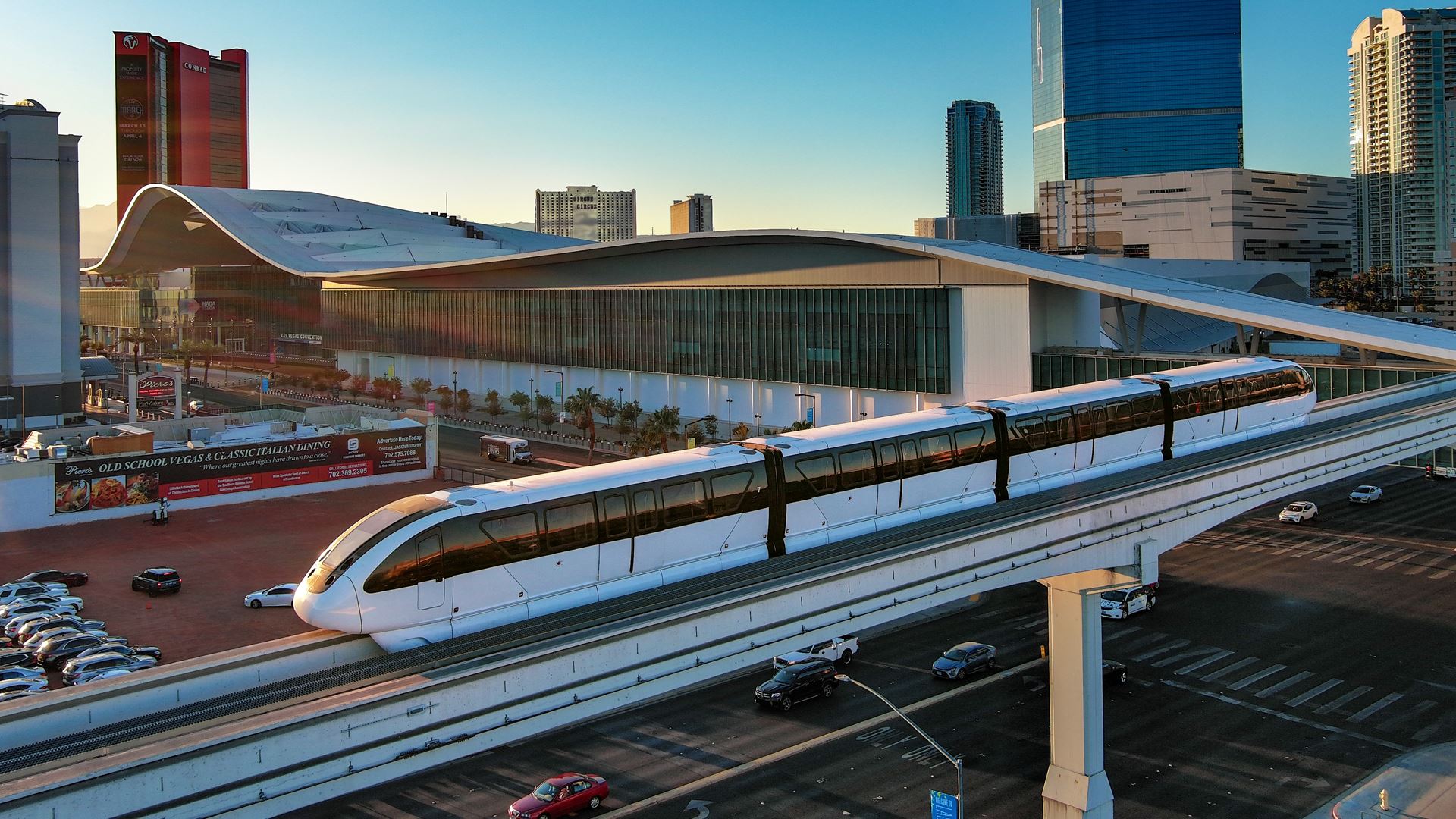
All-electric underground transit connecting the entire LVCC campus
Eliminates surface-level vehicle trips between convention halls
Expanding to connect Strip resorts, airport, and downtown
Source: Las Vegas Convention and Visitors Authority, The Boring Company
Attendee Travel Documentation
70–87%
Travel is the largest share of any event's carbon footprint
Las Vegas's integrated model structurally reduces ground transport — the controllable portion
Air travel emissions documented per GHG Protocol Scope 3 Category 6
Source: GHG Protocol, NZCE Roadmap, DEFRA emission factors
No other US convention market offers both integrated resorts and all-electric campus transit as structural transport advantages.
Free Resource

Get the Las Vegas
Emissions Guide

A free resource for event planners exploring sustainable event documentation in Las Vegas. The guide walks through how the city's infrastructure aligns with global sustainability standards — and what that means for your event's reporting.

How Las Vegas aligns with the NZCE five priority action areas
Venue-level sustainability programs and what they mean for your event
The documentation gap between what events do and what gets reported
Free — delivered directly to your inbox
Send me the guide
Delivered by email.

Note: This form captures name, email, and message details.

Green Analytics • SCOUT Service

Have a Las Vegas Event Coming Up?

A SCOUT assessment documents what your event already does well — on-site, in real time, by someone who has spent fifteen years in Las Vegas convention venues. The result is a professional field report aligned to the NZCE five action areas, ready for your sustainability team, your CDP filing, or your next EIC certification review.

Also included: One complimentary GRID baseline assessment following the completed SCOUT — your first verified Scope 3 carbon footprint score, formatted for CDP and EIC reporting.
What a SCOUT Assessment Covers
01
Prep & Planning — 1 hour
Intake call, contract review, venue research, event calendar review, and on-site plan development.
02
On-Site Observation — 4 hours
Live documentation of production materials, energy sourcing, food programs, logistics, and attendee transport across all five NZCE action areas.
03
Report Development — 1 hour
Photo review, findings synthesis, and production of the professional SCOUT field report with NZCE and EIC alignment summary.
Questions first? Email [email protected]
SCOUT Assessment
$600
Total • Las Vegas
Payment schedule
Deposit — Schedule
Due at contract signing
$100
On-site day
Due day of event
$200
Report delivery
Due at report delivery
$300
Why this matters

The IPCC and NZCE both set 2030 as the critical milestone — a 50% reduction in event emissions from a verified baseline. That baseline has to be established before the reduction can be measured.

A 2026 SCOUT assessment at your Las Vegas event is that baseline. One day, one venue, one report — and you have a defensible starting point for everything that follows.

Visit GreenAnalytics.org • Email [email protected]
About Green Analytics

Built in Las Vegas.
By Someone Who's Been in Every Room.

Green Analytics was founded by Ryan Green, a Las Vegas event professional with fifteen years of experience across venue sustainability management, event production, and contractor operations.

As Sustainable Events Manager at The Venetian | Palazzo under the Sands Eco360 program, Ryan built one of the highest-rated sustainable event programs in the world — including food rescue operations, daily waste audits across one of the largest convention centers in the US, and documentation programs recognized at IMEX America.

Credentials & Framework Alignment
LEED AP — US Green Building Council
EIC Sustainable Event Professional (SEPC)
NZCE Roadmap aligned methodology
GHG Protocol Scope 3 Category 6
EIC Sustainable Event Standards 2024
CDP C6 Business Travel format compliant
EU CSRD Scope 3.6 documentation ready
Ryan Green presenting at SISO CEO Summit
IPCC • NZCE • 2030 Target

The Baseline Window Is Now.

The IPCC and NZCE both set 2030 as the critical milestone — a 50% reduction in event emissions from a verified baseline. That baseline has to be established before the reduction can be measured.

A 2026 SCOUT assessment at your Las Vegas event is that baseline.